Neil deGrasse Tyson is an excellent lecturer and public speaker. He is also a great advocate for science and rational thought.
At a PBS/NOVA-sponsored event, he answered a question regarding his belief in the existence of UFOs and extraterrestrial visitors. He began his response by reminding the audience what the “U” in “UFO” stands for and how humans, in a desperate need for answers, will fill in the blanks of our perceptions.
He was quite right in saying that humans are flawed information gatherers. We are forced to rely on precision instruments, repeated observations, the Scientific Method, and comparing observations with others to get a reliable picture of reality.
Perhaps we are not given to naturally processing information reliably, in favor of forming quick conclusions and quick reactions. An animal in the wild is not usually benefited by calm, slow, patient reasoning and analysis. In a life-and-death situations, an animal must react quickly to escape or fight and survive.
I do not blame people for seeing a mysterious light in the sky and instantly filling in all the banks with whatever happens to be on their minds. That is just the way the primal human mind works. However, it is within our power to stop that thought from reaching our lips and sit down and think about what we just saw. I do not know the exact numbers, if they exist, but the odds of seeing a genuine alien spacecraft or their occupants is far less likely than catching a glimpse of Venus or a meteor hitting the atmosphere.
While not an irrefutable piece of logic in scientific circles, Occam’s razor would seem to apply here. “The simplest solution is usually the correct one.”
[youtube=http://www.youtube.com/watch?v=zfAzaDyae-k]
For those have not seen the Symphony of Science videos yet, I highly recommend you go watch all of them. There are five so far and a new one is added every few months.
In the most recent one, “The Poetry of Reality,” I have found that a few of the scientists in the video think that is “great not knowing”. I understand that all of the phrases and audio clips are taken completely out of context. Even so, I feel that these statements are poorly worded. Surely, Richard Feynman was not advocating ignorance as an alternative to absolute certainty and knowledge. Neither of these are logically tenable positions to try to maintain. Also, both tend to be associated with organized religion.
Absolute certainty means holding a very specific position on a topic and not wavering from it, even in the face of new evidence. An opinion can seem perfectly reasonable at one time, but then will appear more and more absurd to others as time goes on.
Absolute certainty breeds a terrible type of ignorance, willful ignorance. When one is willfully ignorant of reality, they will do everything in their power to avoid newer, uncomfortable evidence. In extreme cases, they will become immune to reason and become a risk to themselves and others.
In order to become inquisitive, one must first admit ignorance where no publicly verifiable evidence exists. Ignorance is not the equivalent of stupidity and it is easy to solve the problem of ignorance. Even if you do not have access to the internet or a library, you can still become a rational, thinking human being.
Also realize that whatever you hold to be true is not invulnerable to new evidence. Be ready to accept that new evidence and incorporate it into your over-arching world view.
Then again, that’s just me. I could be wrong.
Update: If you would like some additional reading, consider Bob Carroll’s “Becoming a Critical Thinker.” It’s a good introductory book to logic and reason applied in the real world.
[youtube=http://www.youtube.com/watch?v=9Cd36WJ79z4]
A few weeks ago, I had a sprited discussion with a friend of mind, Andrew. He successfully made the case to me that short-cut grass is purely ornamental, non functional, and even environmentally harmful. This is echoed in a blog post that Andrew shared with me today.
 Frankly, there are quite a few things that bother me about living in Carmel. The first, most glaring thing is the commute. It takes half an hour to drive to IUPUI from my house. It takes an hour or more to get there by bike. It is very frustrating to have to spend 30 minutes in a car to get to school or work. Not only do I have to drive to work, I am often forced to drive to the grocery store and other business. While these are much closer than the campus, they are still far from my house.
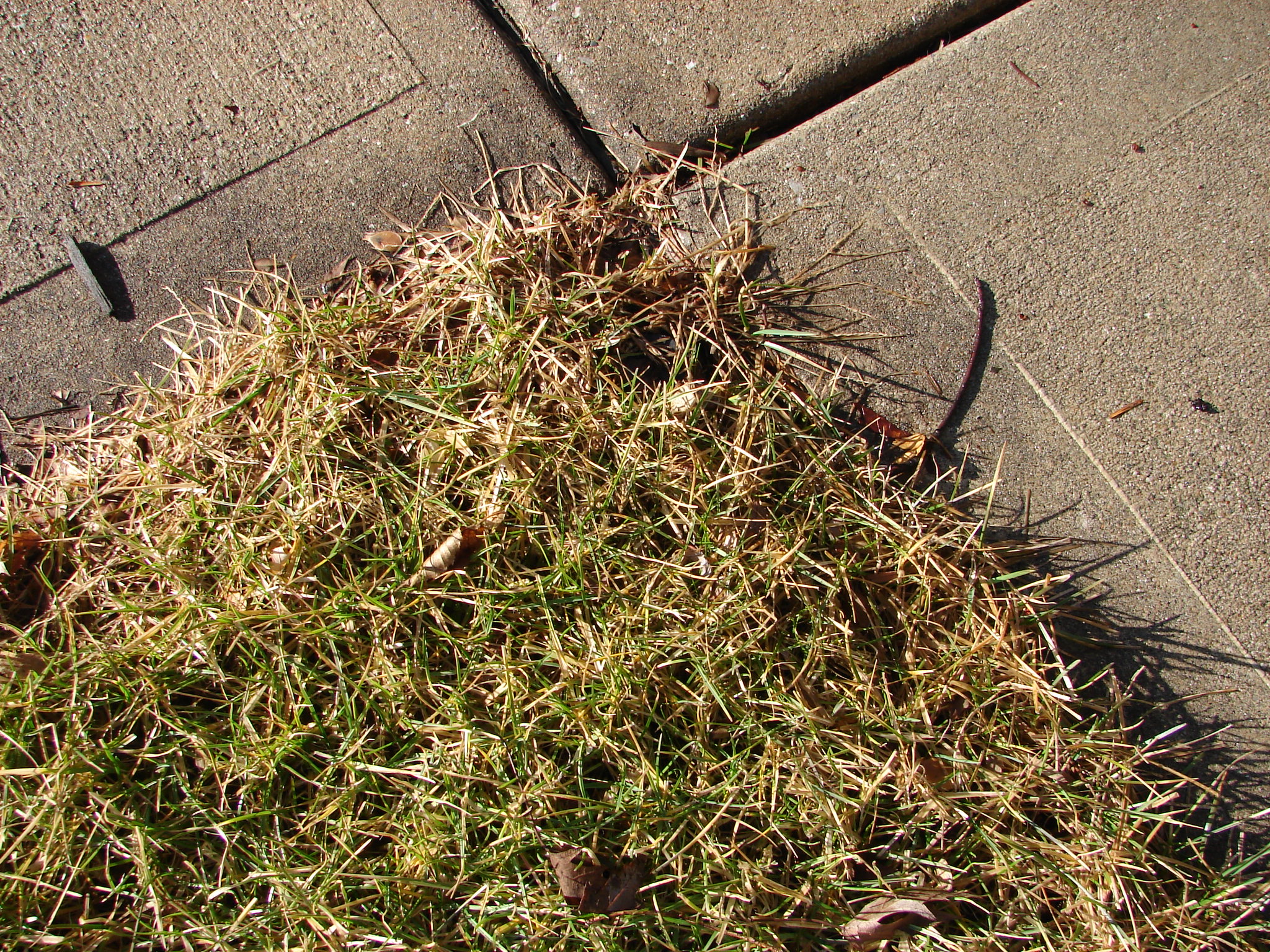
However, these are transportation issues. At home, there is lots of green. Most of that green is in the form of low-cut grass. This grass does not catch rainwater or runoff as effectively as longer grass. Also, because of the shallow root structure in short grass, the roots do not break up and aerate the soil effective, causing the soil under the grass to become compacted and less permeable to water.
In most neighborhoods, there is social, if not legal, pressure to keep grass short and green. Since you have to live near the people next door, simply letting your lawn grow out-of-control is likely not a realistic option.
An excellent way to solve this problem while keeping up the appearance of the lawn is to remove a significant amount of the grass and replace it with plants such as shrubs, bushes, trees, and vines. You could even grow food, though this is probably better suited for the side and back yards. I have seen many houses that use this technique. They are attractive, well-kept, and help retain water and keep it out of the storm drains and water suplies.
When I was seven years old, I joined the “junior” group of the Boy Scouts, the Cub Scouts. When I was eleven, I moved up to the Boy Scouts and after seven years of procrastination and hard work, I earned Eagle Scout.
For those who are not aware, Eagle Scout is not an easy accomplishment. It takes determination and hard work. I felt it was worth it. The ony drawback was, I had to omit certain personal views which would have disqualified me from even being in the Boy Scouts. I was and still am an atheist.
One of the central tenets of BSA’s charter is that a boy must believe in the guiding hand of a higher power in order to acheive a normal, balanced sense of morality. This is a misguided viewpoint and one that keeps well-behaved, intelligent boys and their families from participating in an organization which has been a huge part of American culture for a century.
The tragedy of all this is it is not necessary. Bigotry rarely is. Instead of teaching kids a rigid set of morals based on religion, let them develop their own sense of right and wrong through the world around them and by example. Kids learn by example, anyway, so it should be simple.
Teaching kids how to survive and get by in the outdoors is great and that should always be a part of the scouting experience.
Service to the community is also a must.
Learning about the natural world through experience and observation should be given more ground, rather than faith.
Instead of an opening and closing prayer at meetings, have everyone introduce themselves if the troop is big, have them demonstrate some skill that they learned in Boy Scouts, anything (but prayer). I fully acknowledge that this is a reflection of my own personal values, but a child is no more a Christian than he is a member of the IBEW.
The BSA has a real chance to change their ways and become a youth organization of the 21st century. I doubt that they will any time soon, but a guy can dream.
 Patrick Proctor was here
